 Posted by
 How to Lower Your Car Insurance Premium Legally (Expert Tips)
Car insurance premiums don’t rise by accident. They go up quietly, year after year, until you suddenly realize you’re paying far more than you should. The good news is that lowering your car insurance premium legally isn’t about tricks or loopholes. It’s about understanding how insurers calculate risk and adjusting the factors you actually control.
Most drivers never review their policy beyond renewal notices. That’s where the overpayment starts.
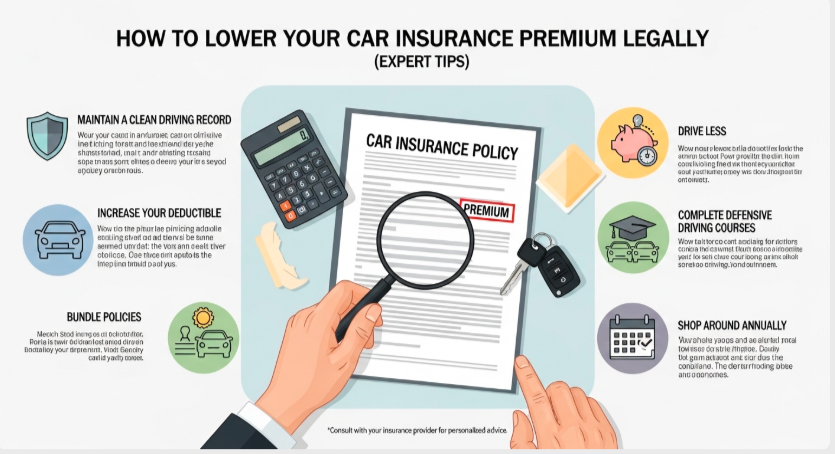
Why Car Insurance Premiums Keep Increasing
Insurance companies price policies based on probability, not fairness. Even safe drivers can see higher rates due to inflation, repair costs, regional accident data, or claim trends unrelated to their behavior. If you don’t actively manage your policy, you absorb those increases by default.
Lower premiums come from positioning yourself as a lower-risk, lower-cost customer.
Reassess Your Coverage, Not Just the Price
Drop Coverage You No Longer Need
If your car’s market value has dropped, carrying full collision and comprehensive coverage may no longer make financial sense. Paying hundreds annually to protect a vehicle worth a few thousand dollars often isn’t cost-effective.
A quick rule many drivers use:
If annual premium for full coverage exceeds 10% of your car’s value, it’s time to reassess.
Adjust Deductibles Strategically
Raising your deductible from $500 to $1,000 can significantly reduce your premium. This works best if you have emergency savings and a clean driving history.
Higher deductibles signal lower claim frequency, which insurers reward.
Improve the Factors Insurers Actually Care About
Your Driving Record Is Everything
Nothing lowers insurance costs more reliably than time. Avoiding tickets, accidents, and claims keeps you in lower-risk pricing tiers.
Even small violations can affect premiums for three to five years.
If you’ve had past incidents, patience combined with clean driving is often the most powerful premium reducer.
Credit-Based Insurance Score Matters
In most states, insurers use credit-based insurance scores to assess risk. Improving your credit doesn’t just help loans; it can directly lower your car insurance premium.
Focus on:
- Paying bills on time
- Reducing credit utilization
- Avoiding frequent new credit applications
The effect isn’t instant, but it compounds over time.
Take Advantage of Discounts Most Drivers Ignore
Bundle Policies
Bundling auto insurance with home or renters insurance often unlocks multi-policy discounts that can reduce premiums by 10–25%. Even renters insurance, which is inexpensive, can trigger significant auto savings.
Low-Mileage and Usage-Based Discounts
If you drive fewer miles than average, you’re statistically less likely to file a claim. Many insurers offer low-mileage discounts or usage-based programs that track driving behavior.
Safe acceleration, gentle braking, and consistent speeds can all reduce premiums without changing how you live.
Professional and Affiliation Discounts
Many policies quietly include discounts for:
- Certain professions
- Alumni associations
- Employer partnerships
- Military or first responder status
These aren’t always advertised. You have to ask.
Shop Smarter, Not More Often
Compare Quotes at the Right Time
The best time to compare car insurance quotes is 30–45 days before renewal. Waiting until the last minute limits negotiating power and increases the chance of coverage gaps.
Comparing too frequently can also backfire if it triggers underwriting reviews.
Don’t Chase the Cheapest Headline Rate
The lowest premium isn’t always the lowest long-term cost. Poor claims service, limited coverage, or aggressive post-claim rate hikes can erase short-term savings quickly.
Focus on:
- Rate stability
- Claims reputation
- Transparent coverage terms
Reduce Risk From the Insurer’s Perspective
Park Smarter
Where you park matters. Garages, secured parking, and well-lit areas reduce theft and damage risk. Updating your garaging address can sometimes lower premiums instantly.
Install Safety and Anti-Theft Features
Modern safety systems aren’t just for protection; they reduce claim severity. Anti-theft devices, alarms, dash cams, and advanced driver assistance features can qualify for discounts or improve underwriting outcomes.
Avoid Costly Mistakes That Raise Premiums
Filing Small Claims
Using insurance for minor repairs often costs more long-term than paying out of pocket. Even no-fault claims can impact future pricing.
Insurance works best for large, unexpected losses—not routine fixes.
Letting Policies Lapse
Coverage gaps signal risk. Even short lapses can cause higher premiums when you reapply. Automatic payments and renewal reminders prevent this easily overlooked mistake.
Frequently Asked Questions
How much can I realistically lower my car insurance premium?
Most drivers can reduce premiums by 10–30% through coverage adjustments, discounts, and smarter shopping. Larger reductions are possible after accidents or credit issues age off.
Is it legal to lower car insurance premiums this way?
Yes. All methods discussed rely on insurer-approved pricing factors and policy options. There are no loopholes or misrepresentations involved.
Does paying annually instead of monthly help?
Often, yes. Many insurers charge installment or financing fees for monthly payments. Paying in full can reduce total annual cost.
Will switching insurers hurt my insurance history?
No. As long as there’s no lapse in coverage, switching insurers does not negatively affect your driving or insurance record.
How often should I review my policy?
At least once per year, and always after major life changes like moving, changing jobs, buying a new car, or improving your credit score.
Conclusion
Lowering your car insurance premium legally isn’t about gaming the system. It’s about understanding how the system evaluates risk and positioning yourself accordingly. Small adjustments—coverage tweaks, smarter deductibles, cleaner driving habits—add up faster than most drivers expect.
If you haven’t reviewed your policy recently, you’re probably overpaying. A careful comparison, paired with strategic changes, can put that money back where it belongs—your pocket—without sacrificing protection.